These original pages contain this section and may include neighbouring provisions and footnotes. Full text search and audio need a verified Unicode version.
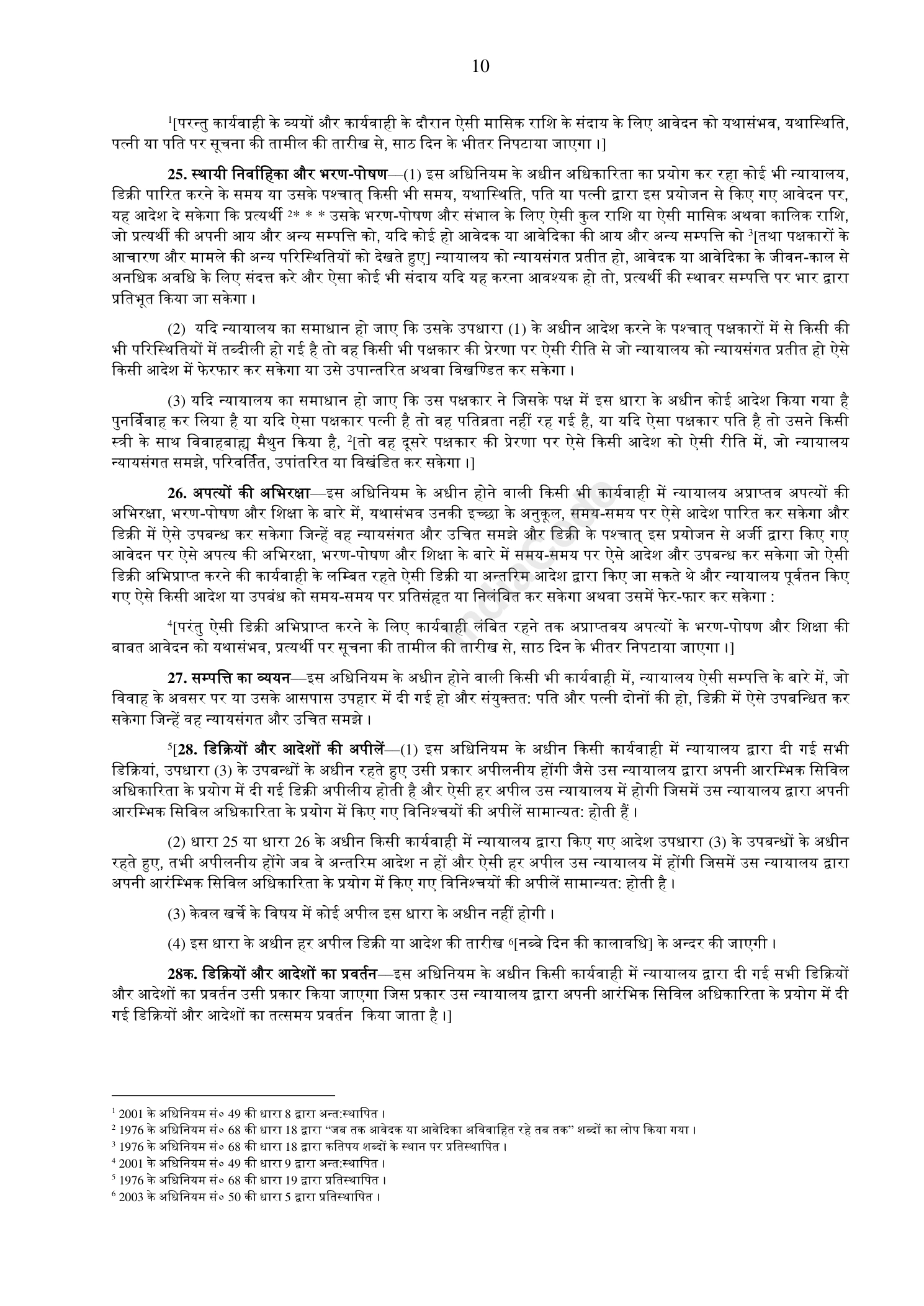
हिन्दू विवाह अधिनियम, 1955 · Permanent alimony and maintenance
आगे पढ़ें / Continue reading
Explore the next section or browse this act in the selected language.
More sections of this act
Section 1 · संक्षिप्त नाम और विस्तारSection 2 · अधिनियम का लागू होनाSection 3 · परिभाषाएँSection 4 · अधिनियम का अध्यारोही प्रभावSection 5 · हिन्दू विवाह के लिए शर्तेंSection 6 · विवाह में अभिभावकताSection 7 · हिन्दू विवाह के लिए कर्मकांडSection 8 · हिन्दू विवाहों का रजिस्ट्रीकरणस्थायी निर्वाह-व्यय और बाद में बदलाव
Reviewed by hemant kumar · 2026-10-19 UTC
Explanatory commentary, separate from the official legal text. यह सरल व्याख्या है, अधिनियम का आधिकारिक अनुवाद नहीं।
English · Permanent alimony: the order and later changes
How section 25 differs from interim support
Section 25 empowers a court exercising jurisdiction under the Hindu Marriage Act to consider an application by either spouse when passing a decree or later. The order may provide a lump sum or monthly or other periodical payments. The term cannot exceed the applicant’s life. The word “permanent” should not be read as making every order immune from later modification.
What the court considers
Subsection (1) identifies the respondent’s income and other property, the applicant’s income and other property, the parties’ conduct and other circumstances of the case. The amount must be what the court considers just. The provision does not set a universal salary percentage. If necessary, payment may be secured by a charge on the respondent’s immovable property; this is not the same thing as automatically transferring ownership of that property.
A practical example
Hypothetical example: a court makes a periodic maintenance order and one party’s financial circumstances later change substantially. Subsection (2) allows either party to seek a variation, modification or rescission if the court is satisfied about changed circumstances. A changed situation does not itself rewrite the order. The existing order and the court’s subsequent directions matter.
Common questions
Can either spouse apply? Yes, the statutory wording includes wife and husband. Must payment always be monthly? No, the section also permits a gross sum or another periodical arrangement. Can an order change after remarriage? Subsection (3) addresses remarriage and the other conduct-related circumstances specified in its text. It gives the court power, at the other party’s instance, to vary, modify or rescind the order. Do not describe every change as automatic termination.
Limits and source references
This guide distinguishes the three statutory subsections; it does not settle entitlement in a particular kind of decree. The scope of “any decree”, entitlement in disputed or void marriages, overlapping maintenance orders and procedural requirements require current judicial interpretation. Do not infer categorical exclusions from this short guide. Compare section 24 for support during the proceeding and section 26 for matters concerning minor children.
हिन्दी · स्थायी निर्वाह-व्यय और बाद में बदलाव
अंतरिम सहायता से यह धारा कैसे अलग है
हिन्दू विवाह अधिनियम की धारा 25 के अनुसार, अधिनियम के अंतर्गत अधिकारिता रखने वाला न्यायालय डिक्री देते समय या उसके बाद पत्नी अथवा पति के आवेदन पर निर्वाह-व्यय पर विचार कर सकता है। आदेश में एकमुश्त, मासिक या अन्य आवधिक राशि हो सकती है। अवधि आवेदक के जीवन से अधिक नहीं हो सकती। “स्थायी” शब्द का अर्थ यह नहीं है कि आदेश में बाद में कभी बदलाव नहीं हो सकता।
न्यायालय किन बातों को देखता है
उपधारा (1) में दूसरे पक्ष की आय और अन्य संपत्ति, आवेदक की आय और अन्य संपत्ति, पक्षों का आचरण तथा मामले की अन्य परिस्थितियों का उल्लेख है। न्यायालय उचित राशि तय करता है। सभी मामलों के लिए वेतन का एक तय प्रतिशत नहीं लिखा है। आवश्यकता होने पर भुगतान के लिए दूसरे पक्ष की अचल संपत्ति पर भार बनाया जा सकता है; इससे संपत्ति का स्वामित्व अपने-आप स्थानांतरित नहीं होता।
समझने के लिए उदाहरण
काल्पनिक उदाहरण: आवधिक निर्वाह का आदेश होने के बाद किसी पक्ष की आर्थिक परिस्थितियों में बड़ा बदलाव आता है। उपधारा (2) के अनुसार, न्यायालय परिस्थितियों के बदलाव से संतुष्ट होने पर किसी भी पक्ष के अनुरोध पर आदेश बदल, संशोधित या रद्द कर सकता है। परिस्थिति बदलने भर से आदेश स्वयं नहीं बदल जाता। मौजूदा आदेश और न्यायालय के बाद के निर्देश महत्वपूर्ण हैं।
अक्सर पूछे जाने वाले प्रश्न
क्या दोनों में से कोई भी जीवनसाथी आवेदन कर सकता है? धारा में पत्नी और पति दोनों आते हैं। क्या भुगतान हमेशा मासिक होगा? नहीं, एकमुश्त या अन्य आवधिक भुगतान भी संभव है। पुनर्विवाह होने पर क्या आदेश बदल सकता है? उपधारा (3) पुनर्विवाह और उसके पाठ में बताए गए अन्य आचरण संबंधी आधारों पर दूसरे पक्ष के अनुरोध से न्यायालय को आदेश बदलने, संशोधित करने या रद्द करने की शक्ति देती है। हर बदलाव को स्वतः भुगतान बंद होना न बताएं।
व्याख्या की सीमा
यह मार्गदर्शिका तीनों उपधाराओं का अंतर समझाती है, किसी खास डिक्री में अधिकार का अंतिम निर्णय नहीं देती। “किसी डिक्री” का दायरा, शून्य या विवादित विवाह में अधिकार, अन्य निर्वाह आदेश और प्रक्रिया के प्रश्नों पर वर्तमान न्यायिक व्याख्या देखनी होगी। इस छोटे लेख से किसी वर्ग को पूरी तरह अपात्र न मानें। मुकदमे के दौरान सहायता के लिए धारा 24 और अवयस्क बच्चों से जुड़े प्रश्नों के लिए धारा 26 पढ़ें।
India Code, Government of India. Text fetched 10 Oct 2026. Source metadata reports last modification: 2026-05-06. Check the linked official text and subsequent notifications when applying a provision.