These original pages contain this section and may include neighbouring provisions and footnotes. Full text search and audio need a verified Unicode version.
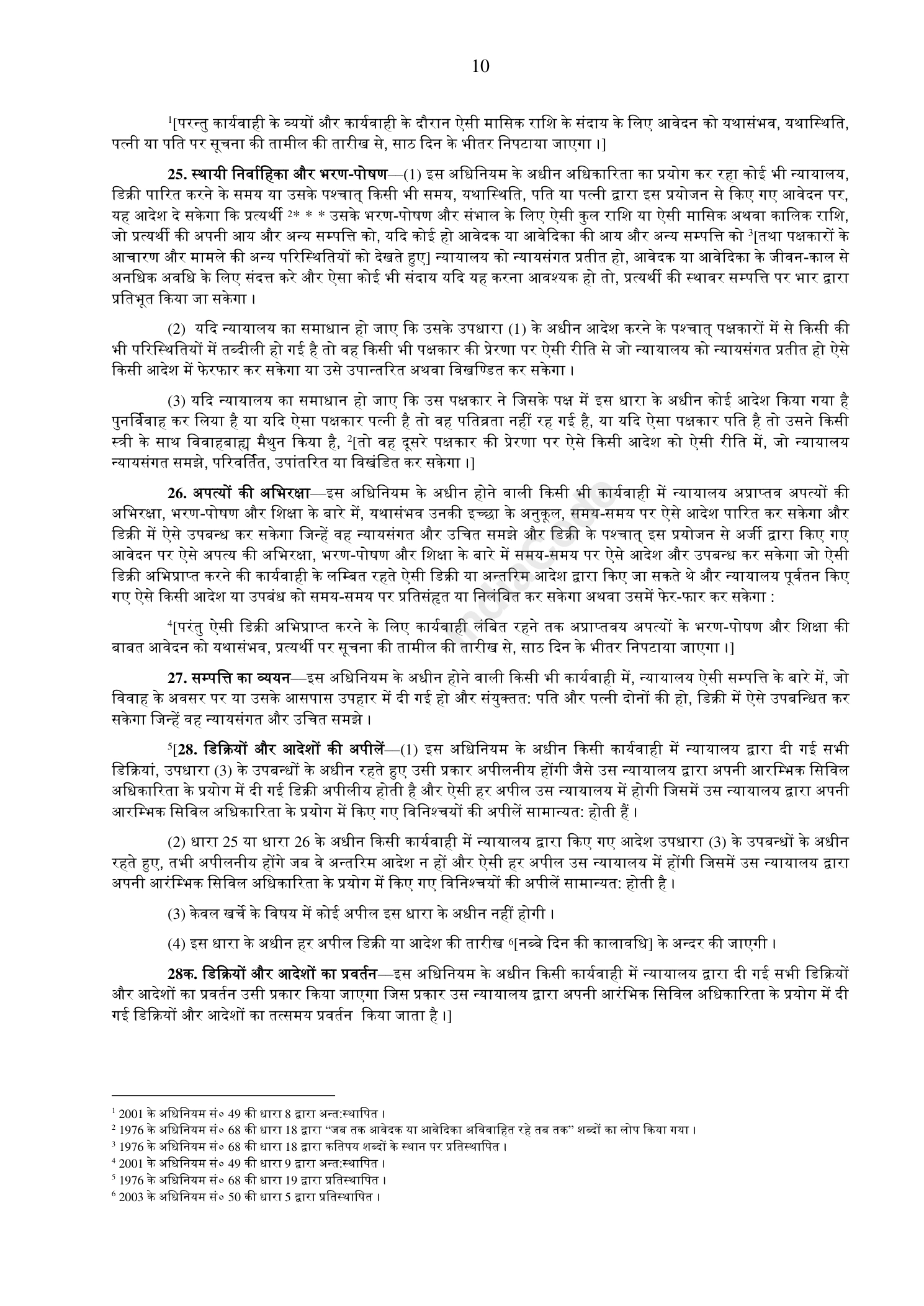
हिन्दू विवाह अधिनियम, 1955 · Custody of children
आगे पढ़ें / Continue reading
Explore the next section or browse this act in the selected language.
More sections of this act
Section 1 · संक्षिप्त नाम और विस्तारSection 2 · अधिनियम का लागू होनाSection 3 · परिभाषाएँSection 4 · अधिनियम का अध्यारोही प्रभावSection 5 · हिन्दू विवाह के लिए शर्तेंSection 6 · विवाह में अभिभावकताSection 7 · हिन्दू विवाह के लिए कर्मकांडSection 8 · हिन्दू विवाहों का रजिस्ट्रीकरणबच्चों की अभिरक्षा, निर्वाह और शिक्षा
Reviewed by hemant kumar · 2026-10-19 UTC
Explanatory commentary, separate from the official legal text. यह सरल व्याख्या है, अधिनियम का आधिकारिक अनुवाद नहीं।
English · Children’s custody, maintenance and education
The three subjects covered
Section 26 deals with custody, maintenance and education of minor children during proceedings under the Hindu Marriage Act. The court can make interim orders and include appropriate provisions in its decree. The section directs that children’s wishes should be considered wherever possible. It does not prescribe an automatic award of custody to a parent solely because that parent is the mother or the father.
Orders can continue to be considered after the decree
The court may make further orders after the decree on an application by petition. It can also revoke, suspend or vary earlier orders and provisions. This helps explain why an initial arrangement is not necessarily a final answer for every later circumstance. The actual terms of the operative order need to be read before assuming that an arrangement has changed.
A practical example
Hypothetical example: an interim order addresses where a minor child will stay and how education expenses will be met. Later, the child’s educational needs or living arrangements change. Section 26 permits the court to reconsider appropriate provisions. The example illustrates the subjects within the provision; it does not determine which parent should have custody or what a court will order.
Common questions
Does the section concern only physical custody? No. Maintenance and education are separate subjects expressly included. Are children’s wishes irrelevant? No. The text calls for consistency with their wishes wherever possible. Can the court change an earlier arrangement? Yes, the section expressly allows revocation, suspension or variation, alongside later orders made on application.
What the sixty-day proviso actually addresses
The qualified sixty-day disposal target concerns applications about maintenance and education of minor children during the pending proceeding. Time runs from service of notice on the respondent, and the text qualifies the target with “as far as possible”. It should not be advertised as a guaranteed custody decision within sixty days of filing.
Source limits and the next section
This is a statutory orientation, not a complete guide to child welfare principles, guardianship law, jurisdiction or current case law. Those questions require separate primary sources and current judicial interpretation. Section 24 concerns a spouse’s support during the proceeding; section 25 concerns permanent alimony. Keep those questions separate from the child-related issues covered here.
हिन्दी · बच्चों की अभिरक्षा, निर्वाह और शिक्षा
धारा किन तीन विषयों पर है
हिन्दू विवाह अधिनियम की धारा 26, अधिनियम के अंतर्गत कार्यवाही में अवयस्क बच्चों की अभिरक्षा, भरण-पोषण और शिक्षा से संबंधित है। न्यायालय अंतरिम आदेश दे सकता है और डिक्री में उचित प्रावधान कर सकता है। जहाँ संभव हो, बच्चों की इच्छाओं के अनुरूप व्यवस्था का उल्लेख किया गया है। यह धारा केवल माता या पिता होने के कारण किसी एक पक्ष को स्वतः अभिरक्षा नहीं देती।
डिक्री के बाद भी आदेश पर विचार हो सकता है
डिक्री के बाद इस उद्देश्य से याचिका द्वारा आवेदन करने पर न्यायालय आगे भी आदेश दे सकता है। पहले दिए गए आदेश और प्रावधान रद्द, स्थगित या परिवर्तित किए जा सकते हैं। इसलिए शुरुआती व्यवस्था को हर बाद की परिस्थिति का अंतिम उत्तर न मानें। कोई बदलाव मानने से पहले प्रभावी आदेश की वास्तविक शर्तें पढ़ना जरूरी है।
समझने के लिए उदाहरण
काल्पनिक उदाहरण: एक अंतरिम आदेश तय करता है कि अवयस्क बच्चा कहाँ रहेगा और उसकी शिक्षा का खर्च कैसे पूरा होगा। बाद में उसकी पढ़ाई की जरूरत या रहने की परिस्थिति बदलती है। धारा 26 उचित प्रावधानों पर फिर विचार की अनुमति देती है। इस उदाहरण से धारा के विषय समझें; यह किसी माता या पिता को अभिरक्षा देने अथवा अदालत के संभावित निर्णय की भविष्यवाणी नहीं है।
अक्सर पूछे जाने वाले प्रश्न
क्या धारा केवल बच्चे के रहने की जगह पर है? नहीं, भरण-पोषण और शिक्षा भी इसमें अलग विषय हैं। क्या बच्चे की इच्छा का कोई महत्व नहीं है? पाठ में जहाँ संभव हो, उसकी इच्छाओं के अनुरूप प्रावधान करने की बात है। क्या पुराना आदेश बदल सकता है? हाँ, धारा पहले के आदेश को रद्द, स्थगित या बदलने और आवेदन पर बाद के आदेश देने की शक्ति बताती है।
साठ दिनों के परंतुक का सही अर्थ
यह लक्ष्य चल रही कार्यवाही में अवयस्क बच्चों के भरण-पोषण और शिक्षा से संबंधित आवेदन के निपटारे के लिए है। अवधि दूसरे पक्ष पर सूचना की तामील से शुरू होती है और “जहाँ तक संभव हो” की शर्त के साथ है। इसे दाखिले के साठ दिनों में अभिरक्षा का फैसला मिलने की गारंटी के रूप में न बताएं।
स्रोत की सीमा और आगे पढ़ें
यह वैधानिक परिचय है। बाल कल्याण के सिद्धांत, संरक्षकता, अधिकारिता और वर्तमान न्यायिक दृष्टांत के लिए अलग प्राथमिक स्रोत देखने होंगे। धारा 24 कार्यवाही के दौरान जीवनसाथी की सहायता तथा धारा 25 स्थायी निर्वाह से संबंधित है। उन प्रश्नों को इस धारा के बाल-संबंधी विषयों से अलग समझें।
India Code, Government of India. Text fetched 10 Oct 2026. Source metadata reports last modification: 2026-05-06. Check the linked official text and subsequent notifications when applying a provision.